
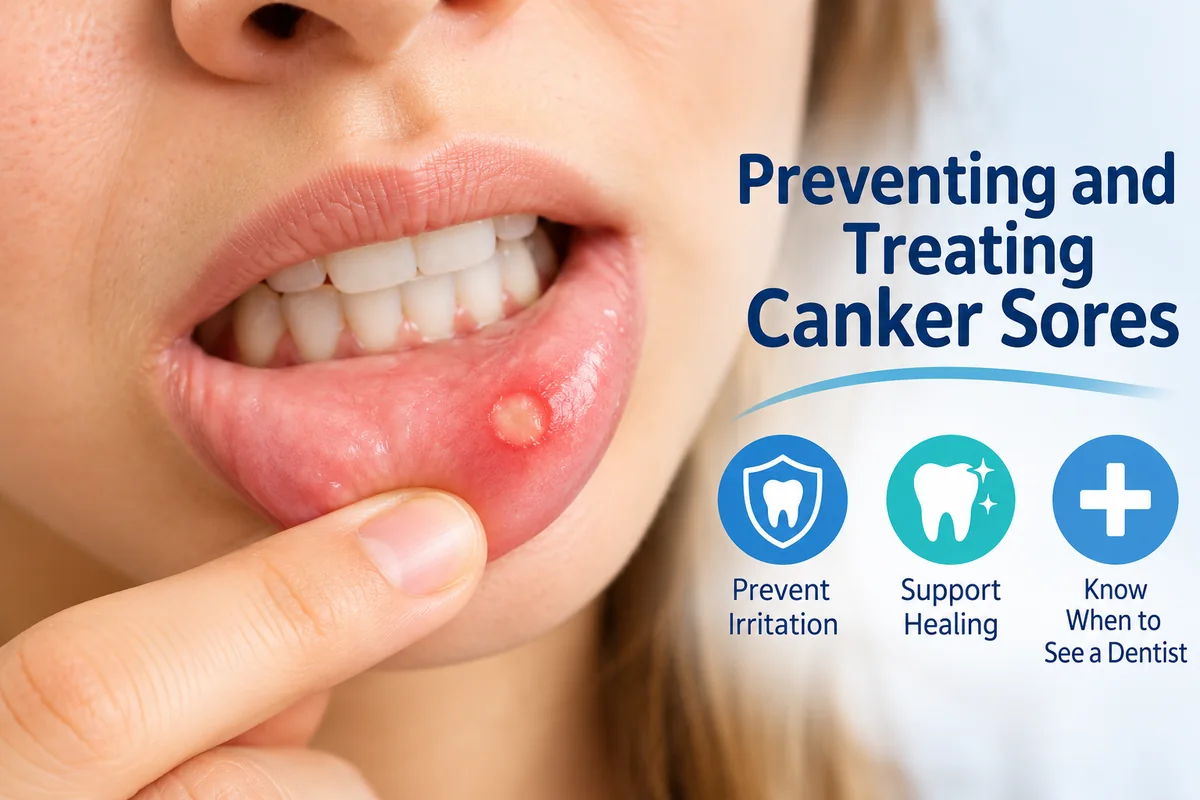
Preventing and Treating Canker Sores
Canker sores, also called aphthous ulcers, are small, painful sores that develop inside the mouth. They commonly appear on the inner cheeks, lips, tongue, or other soft tissues of the mouth. Although they are not contagious, they can make everyday activities such as eating, drinking, brushing, and speaking uncomfortable.
The good news is that most canker sores heal on their own. Understanding what may trigger them, how to reduce irritation, and when to seek professional care can help you manage these uncomfortable sores.
1. What Are Canker Sores?
Canker sores are usually round or oval ulcers with a white or yellowish center and a red border. They develop inside the mouth and are different from cold sores, which are caused by the herpes simplex virus and commonly appear on or around the lips.
Canker sores are not caused by the herpes virus and cannot be spread from person to person.
Types of Canker Sores
There are three main types:
-
Minor canker sores: These are the most common type. They are generally small, usually less than 1 centimeter across, and typically heal within one to two weeks without scarring.
-
Major canker sores: These are larger and deeper than minor sores. They can be especially painful, may take several weeks to heal, and sometimes leave scars.
-
Herpetiform canker sores: These are clusters of very small ulcers that may join together to form a larger sore. Despite their name, they are not caused by the herpes virus.
2. What Causes Canker Sores?
The exact cause of canker sores is not fully understood. However, certain factors may trigger an outbreak or make sores more likely to develop.
Common contributing factors include:
-
Minor mouth injuries: Accidentally biting your cheek or tongue, brushing too aggressively, or irritation from dental appliances can contribute to sore formation.
-
Stress and fatigue: Some people notice that canker sores develop during periods of emotional stress or lack of sleep.
-
Certain foods: Acidic, spicy, salty, or rough-textured foods may irritate the mouth or trigger sores in susceptible individuals. Examples include citrus fruits, tomatoes, and chips.
-
Nutritional deficiencies: Low levels of iron, vitamin B12, folate, or zinc may be associated with recurrent canker sores.
-
Hormonal changes: Some people experience outbreaks around certain times of their menstrual cycle.
-
Family history: Canker sores may occur more frequently in people whose family members also experience them.
-
Underlying health conditions: Recurrent or unusually severe sores can sometimes be associated with conditions such as celiac disease, Crohn’s disease, or certain immune-related disorders.
Not everyone has identifiable triggers, and having a canker sore does not necessarily mean you have an underlying health problem.
3. How to Help Prevent Canker Sores
Although it may not be possible to prevent every outbreak, a few simple habits may help reduce irritation and the frequency of sores.
Practice Gentle Oral Hygiene
-
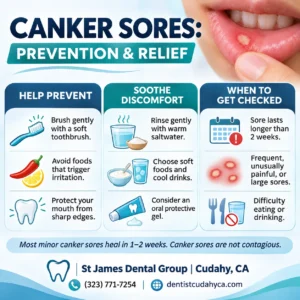
Use a soft-bristled toothbrush and brush gently to avoid injuring the soft tissues inside your mouth.
-
Choose an alcohol-free mouthwash if regular mouthwash causes irritation.
-
Maintain regular dental checkups so your dentist can identify potential sources of irritation, such as sharp tooth edges or poorly fitting dental appliances.
Identify and Avoid Food Triggers
Pay attention to foods that seem to cause or worsen your sores. Acidic, spicy, and crunchy foods are common irritants for some people.
Keeping a simple food diary may help you identify patterns. You do not need to eliminate foods unnecessarily if they do not bother you.
Manage Stress and Get Enough Rest
Some people experience more frequent outbreaks during stressful periods. Activities such as walking, meditation, deep breathing, and getting adequate sleep may help support overall well-being.
Protect the Soft Tissues of Your Mouth
Be careful when chewing hard or sharp foods, and avoid habits such as biting your cheeks or lips. If you frequently injure the inside of your mouth because of a rough tooth edge or dental appliance, ask your dentist to evaluate it.
4. How to Relieve Canker Sore Discomfort
Most canker sores heal without treatment, but several approaches can help reduce discomfort while the area heals.
Saltwater Rinse
Mix one-half teaspoon of salt into one cup of warm water. Gently rinse your mouth and spit out the solution. This may help soothe irritated tissues. Avoid swallowing the rinse.
Baking Soda Rinse
Mix one teaspoon of baking soda into one-half cup of water. Gently rinse and spit. This may help soothe irritation for some people.
Avoid Irritating Foods
While a sore is healing, try to avoid foods that are spicy, acidic, very salty, or crunchy. Choose softer foods and cool drinks if they are more comfortable.
Over-the-Counter Products
Some nonprescription oral gels or protective pastes can temporarily relieve pain or cover the sore to reduce irritation. Follow the product instructions and ask your pharmacist or dentist if you are unsure which product is appropriate.
Professional Treatment
If canker sores are particularly painful, frequent, or slow to heal, your dentist or physician may recommend additional treatment. Depending on the situation, this may include prescription topical medication to reduce inflammation and discomfort.
Treatment depends on the size, severity, frequency, and suspected cause of the sores.
5. When Should You See a Dentist or Doctor?
Most minor canker sores disappear within one to two weeks. However, not every mouth sore is a canker sore, and a persistent sore should not be ignored.
Schedule an evaluation if you experience:
-
A sore that does not heal: Any mouth sore lasting longer than two weeks should be examined.
-
Large or unusually painful sores: These may require professional evaluation and treatment.
-
Frequent outbreaks: Repeated canker sores may warrant an evaluation for possible contributing factors.
-
Difficulty eating or drinking: Severe discomfort that interferes with normal activities should be addressed.
-
Additional symptoms: Fever, diarrhea, unusual fatigue, or other symptoms along with recurring mouth sores may indicate an underlying condition.
Your dentist can examine the affected area, help determine whether it appears to be a canker sore or another type of oral lesion, and recommend appropriate next steps.
6. Canker Sores and Your Oral Health
Canker sores are common and usually temporary. However, recurring or persistent sores deserve attention, especially when they interfere with eating, speaking, or maintaining your normal oral hygiene routine.
At St James Dental Group in Cudahy, CA, we believe in helping patients understand changes in their oral health and feel comfortable asking questions. If you have a mouth sore that is painful, recurring, or not healing as expected, a dental evaluation can help determine whether further care is needed.
Taking care of your oral health includes paying attention to changes in the soft tissues of your mouth, not just your teeth and gums.
Frequently Asked Questions About Canker Sores
Are canker sores contagious?
No. Canker sores are not contagious and cannot be spread through kissing, sharing utensils, or close contact. They are different from cold sores, which are caused by a virus.
How long do canker sores usually last?
Most minor canker sores heal within one to two weeks. Larger or deeper sores may take several weeks to resolve.
Can stress cause canker sores?
Stress may be a trigger for some people, although it is not the only possible cause. Other factors, including minor mouth injuries, food sensitivities, and nutritional deficiencies, may also contribute.
Should I brush my teeth when I have a canker sore?
Yes. Continue brushing and flossing, but be gentle around the affected area. A soft-bristled toothbrush can help minimize irritation.
When should I worry about a mouth sore?
A sore that lasts longer than two weeks, grows larger, repeatedly returns, or is accompanied by other symptoms should be evaluated by a dentist or physician. For your dental consultation call 323-771-7254